
The wedding timeline guide
How to build a wedding timeline that gives the day room to breathe
The best wedding timeline is not the one with the most detail. It helps suppliers work together, guests know where to be and you experience the day without constantly checking the time.

Map the anchors
Begin with the moments that cannot move
Fixed supplier and venue times create the framework.
Separate the planning timeline from the day itself
Your planning timeline covers decisions, bookings and deadlines over many months. The wedding-day timeline covers arrivals, setup, ceremony, photographs, food and celebrations across a few hours.
Keep them connected but distinct. A supplier deadline belongs in the planning checklist; their arrival and finish time belong in the operational running order.
Start with fixed anchors
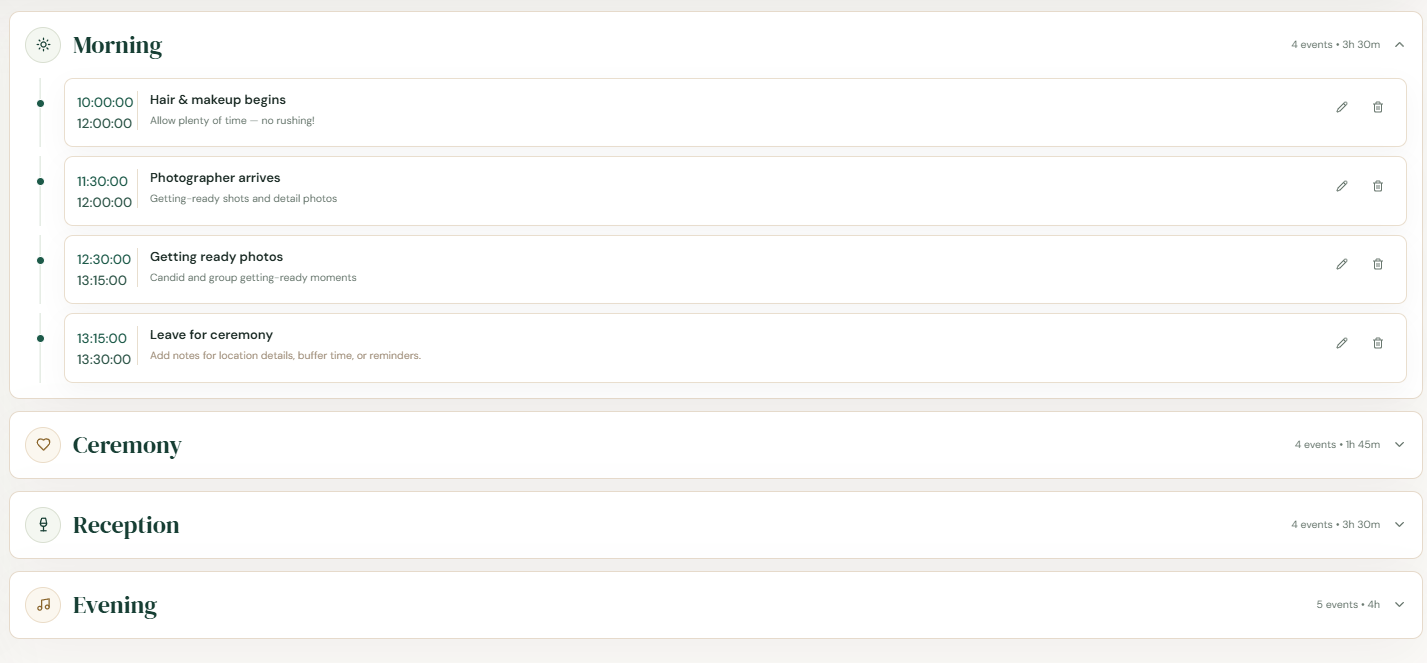
Add venue access, ceremony time, legal requirements, meal service and hard finish times first. Then include contracted supplier hours and any transport that cannot move.
These anchors reveal the usable space between moments and prevent a beautiful schedule conflicting with access, licensing or the time your photographer leaves.
Ask suppliers for realistic durations
Your photographer, caterer, stylist, entertainment and venue team know how long their work takes in practice. Ask about setup, transitions, speeches, room turns and pack-down.
Where advice conflicts, bring people together early rather than guessing. The final timeline should reflect how the whole team works, not isolated estimates.

Create the rhythm
Add honest timings and generous transitions
A little margin makes every important moment feel better.
Include movement and buffer time
Allow for getting dressed, finding people for photographs, moving guests and loading vehicles. A ten-minute journey can require much longer once a wedding party and belongings are involved.
Add breathing room around the moments you care about most. Small buffers absorb delays; without them, one late start can make every later part feel hurried.
Consider the timeline from a guest’s perspective
Guests should rarely wonder what happens next or endure long periods without somewhere comfortable to be. Check travel, refreshments, seating and weather cover between formal moments.
A relaxed drinks reception can be lovely when intentional. It feels less so when photographs overrun and nobody knows when food will arrive.
Create useful versions for different people
The coordinator needs the detailed master schedule and contacts. Suppliers need sections affecting their work. The wedding party needs arrival times, responsibilities and locations.
Guests need only simple information such as ceremony, transport and finish times. Sharing everything with everyone can make an organised plan harder to use.
Share the plan
Give the right detail to the right people
A clear handover means the couple never has to coordinate.
Hand the day over
Choose a coordinator, venue contact or trusted person to hold the master copy and manage questions. Make introductions and clarify who can approve small changes.
Once the day begins, the timeline should support you rather than demand attention. If a harmless detail slips by five minutes, let it go and stay with the moment.
Keep in mind
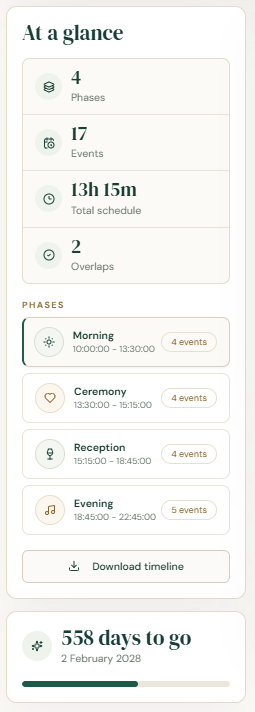
Leave breathing room in the plan
The best plan supports the celebration rather than controlling it. Keep decisions visible, review them together and allow space for real life to change the details.
Bring the plan together
See the whole picture in ReadySetWed
Turn guidance into a shared, practical plan, with the important details connected and easy for both of you to understand.
Plan with clarity
Keep what matters at the centre of every decision.
ReadySetWed brings your plans, people and spending together in one calm, shared place.