
The wedding budget guide
How to plan a wedding budget without losing sight of what matters
A useful wedding budget is more than one total at the top of a spreadsheet. It should help you agree priorities, understand what is already committed and make confident decisions as plans change.

Set your foundations
Build a budget around what matters
Start with an honest total, agree priorities and create useful categories.
Start with the money you can genuinely use
Begin with an honest conversation about the amount you are both comfortable spending. Include confirmed contributions from family only when the amount and timing are clear. A hopeful promise is not the same as money that is available, and building plans around an uncertain contribution can create pressure later.
Discuss whether your total needs to cover the honeymoon, rings, pre-wedding celebrations or next-day plans. Couples often use the phrase “wedding budget” to mean different things, so agreeing the boundaries now prevents confusion when quotes begin to arrive.
Choose your priorities before dividing the budget
Rather than copying somebody else’s percentages, each of you should name the two or three parts of the wedding that matter most. You might care deeply about food and photography, while elaborate flowers or favours feel less important. Another couple may make completely different choices.
Combine your lists and use them as a decision guide. Giving more room to a priority usually means spending less somewhere else; that is not a failure, it is the purpose of a personalised budget. Revisit the priorities whenever a tempting extra appears.
Create categories that match your wedding
Set up broad categories such as venue, catering, photography, outfits, flowers, entertainment, stationery, transport and ceremony costs. Then add the smaller items that sit beneath them. Useful categories let you see where money is going without turning the budget into hundreds of disconnected lines.
Your categories should reflect the day you are actually planning. A venue with catering included needs a different structure from a dry-hire venue where furniture, staff, tableware and food are separate. Record what each package includes so comparisons are meaningful.
- Note whether VAT and service charges are included in every quote.
- Separate optional upgrades from the essential price.
- Record quantities where guest numbers affect the cost.
Allocate with intention
Turn estimates into a realistic plan
Separate estimates from commitments and make room for overlooked costs.
Separate estimated, confirmed and paid costs
An early estimate helps you test whether your plan is realistic. Once you choose a supplier, replace the estimate with the confirmed contract value rather than deleting the original thinking entirely. Then track how much has been paid and how much remains.
These figures answer different questions: what did we expect, what have we committed to and what still needs to leave our account? Treating a deposit as the full cost can make the budget look healthier than it is and creates a nasty surprise when final balances become due.
Plan cash flow as well as the final total
Two weddings with the same overall cost can feel very different depending on when payments are due. Add every deposit, instalment and final-balance date as soon as you sign a contract. Then look across the months to spot periods when several large payments arrive together.
Knowing the timing lets you adjust your saving plan or ask a supplier about an instalment schedule before a deadline becomes stressful. Keep proof of each payment and check that the amount matches the contract and invoice.
Make space for the costs that are easy to miss
Small additions can collectively move the total by more than expected. Delivery and collection, alterations, postage, corkage, supplier meals, beauty trials, tips, insurance, transport home, accommodation and last-minute printing are common examples, but only include costs relevant to your plans.
Walk through the wedding from the first preparation in the morning to the final journey home. Then repeat the exercise for the weeks before and after. This often reveals practical items that do not appear in an inspirational moodboard but still need paying for.

Stay in control
Review the whole picture as plans change
Compare value, keep commitments visible and make changes together.
Compare value, not only the headline price
The cheapest quote is not automatically the best fit, and the most expensive package is not automatically the most complete. Compare like with like: hours of coverage, staffing, travel, equipment, revisions, delivery and cancellation terms can change the real value significantly.
Read contracts carefully and ask questions before paying. Keep notes about what was discussed, but rely on the written agreement for the final details. If a term is unclear or especially important, ask the supplier to confirm it in writing and seek professional advice where appropriate.
Keep the budget visible throughout planning
A budget only helps when it stays current. Choose a regular moment to update new quotes, payments and revised guest numbers together. Short, calm check-ins are easier than reconstructing months of decisions after the money has already been spent.
When one category rises, decide deliberately whether to use contingency, reduce another category or increase the total. Seeing the effect straight away keeps both partners involved and turns the budget into a shared planning tool rather than a source of blame.
Keep in mind
Leave breathing room in the plan
The best plan supports the celebration rather than controlling it. Keep decisions visible, review them together and allow space for real life to change the details.
Bring the plan together
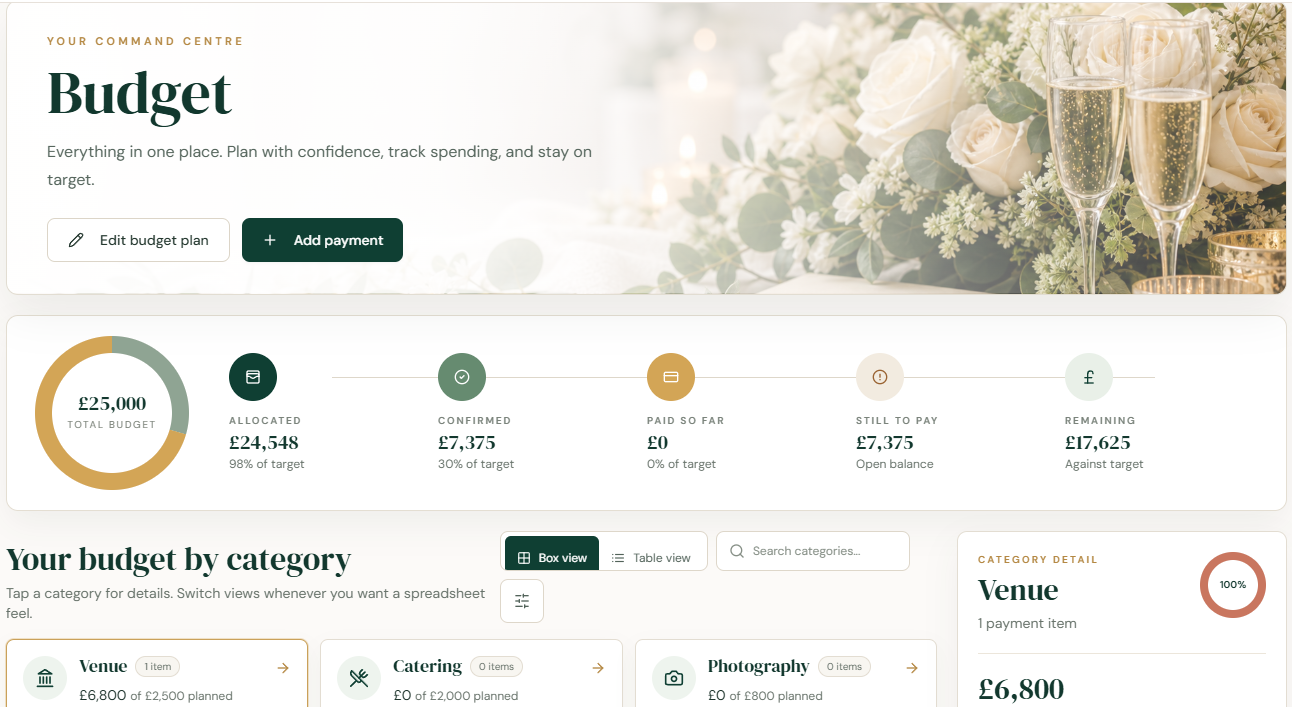
See the whole picture in ReadySetWed
Turn guidance into a shared, practical plan, with the important details connected and easy for both of you to understand.
Plan with clarity
Keep what matters at the centre of every decision.
ReadySetWed brings your plans, people and spending together in one calm, shared place.